We asked blind and low-vision friends to describe their worlds, then translated those descriptions into moving images. In the room the films are the size of a hand; here, they play at your size.
01
The Crane and the Moon
Someone described the moon as something near — near enough to install. So we hung it.
02
The Threshold
Half of it is not yet said; half already understood. The border keeps moving, and dust crosses through the light.
03
Brightness That Refuses
That brightness is not for seeing — it forces the eyes shut. Only when he said "bright" did we learn that brightness can refuse.
04
A Cathedral Overheard
A building never visited, built from adjectives overheard. The grain of the stone is the residue of other people's voices.
05
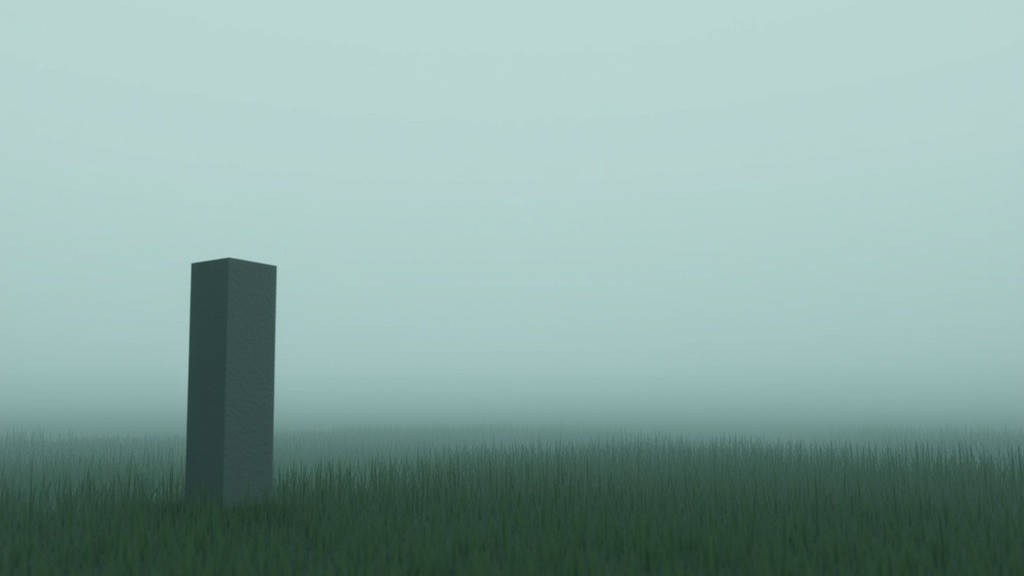
Steles in Fog
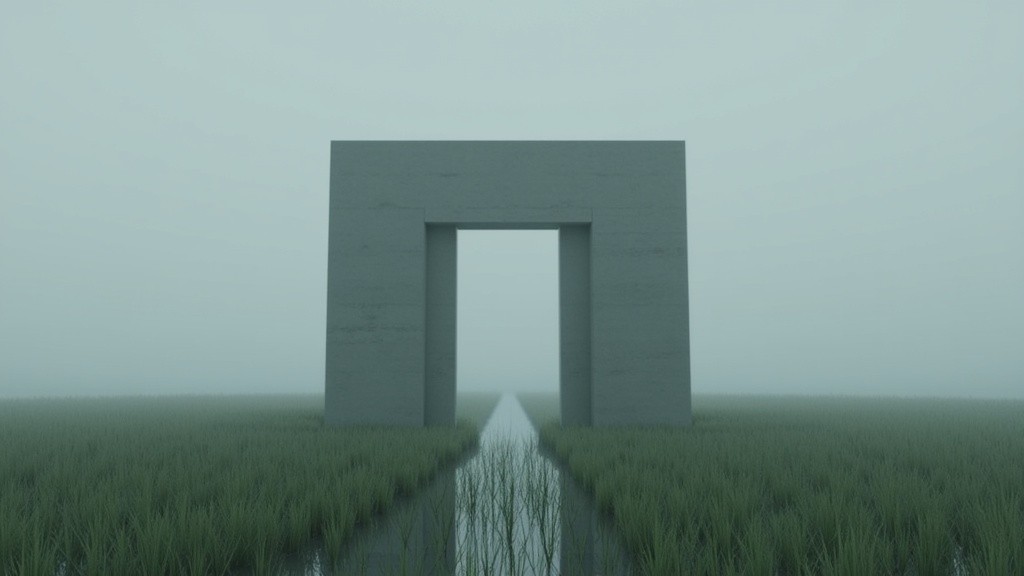
Grass to the knee, steles in fog. A shape without a name can still be remembered — remembering how it feels is enough.
06
Assemblage at Dusk
A column, pipes, a cracked tub: sentences from different people piled into one dusk. None is whole; together they resemble a home.
07
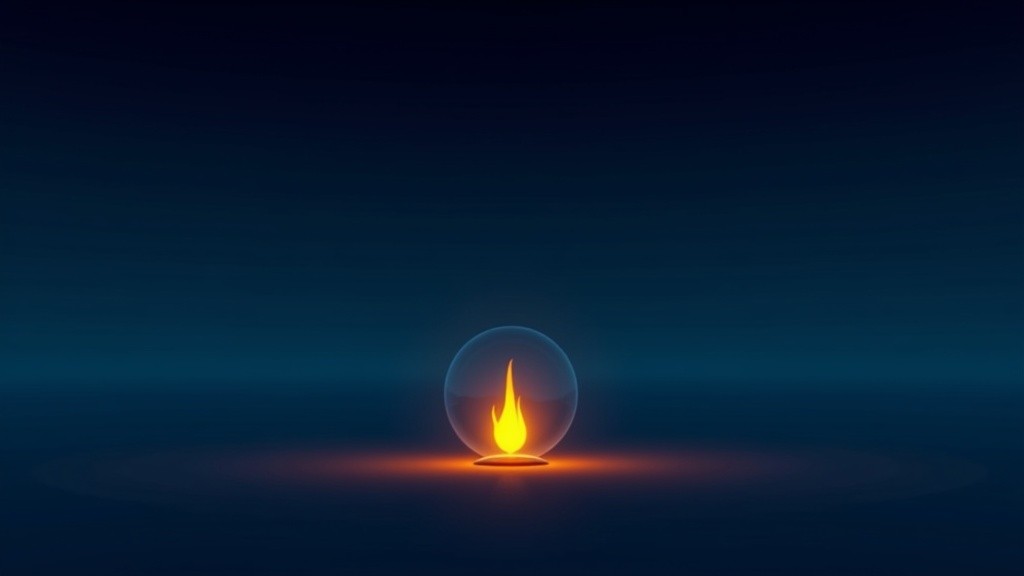
The Wire Sphere
The thing inside can't be explained — only that it burns, and that wire wraps around it. The fire is small; it stays lit.
08
A Planet on No Map
The world he spoke of is on no map. Fine — give it a glowing horizon and a few yellow moons. It is wherever you say it is.
09
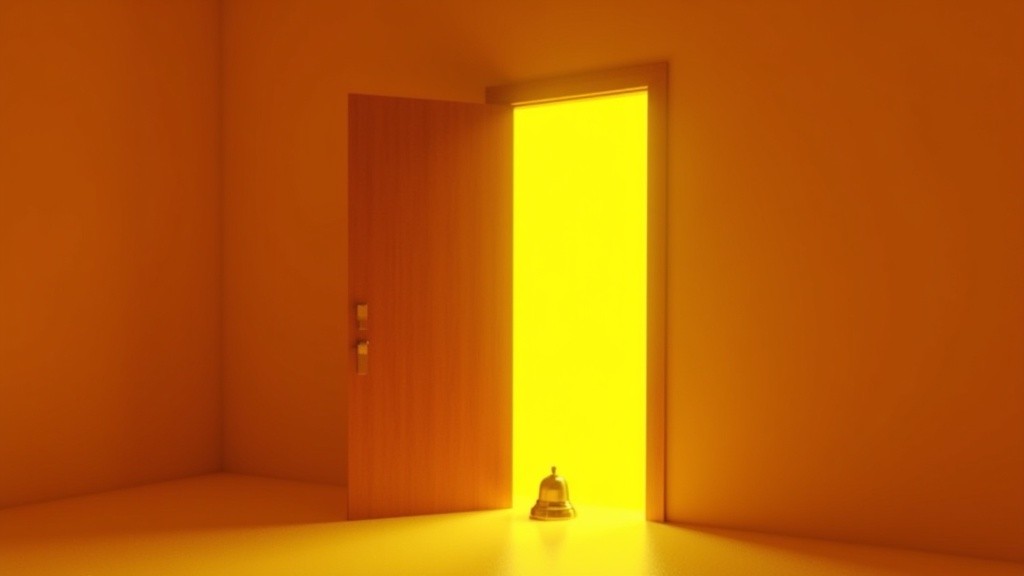
The Doorway
She stands in the doorway; beyond it, a sky described to her a thousand times. Seeing was never something we could finish on her behalf.
10
Three Cats
Three cats on a white city — a kitten between two grown ones — watching the sun go down. No one explains orange to anyone. Some company precedes understanding, and asks for none.
11
Daytime Through Paper
The whole world gauzed in yellow, like light seen through paper. He said: this is my daytime. So we placed the camera inside the paper, too.
The captions are the translators' second readings — not quotations. Some films combine the descriptions of several storytellers. They record how we listened, not what was said.
⠠⠞⠓⠑⠀⠺⠕⠗⠇⠙⠀⠊⠎⠀⠽⠕⠥⠗⠎⠀⠱⠆⠛⠑⠱⠆⠝⠊⠙⠢
02 · Eight Channels
Eight channels fill the dark from eight corners; they never pair with the screens. To see, you walk to an image; to listen, you stand where the channels balance.
Combined stereo reference, 11'09". In the room they play as eight independent sources. The only words spoken are the sentence itself — 世界是你的, the world is yours — nearly two hundred times, in different voices and accents, cut into eight channels: this is the complete transcript. The sound layer is complete in itself: for blind and low-vision visitors it is the entire work.
⠠⠞⠓⠑⠀⠺⠕⠗⠇⠙⠀⠊⠎⠀⠽⠕⠥⠗⠎
One sentence, two hundred ways of saying it.
⠱⠆⠛⠑⠱⠆⠝⠊⠙⠢
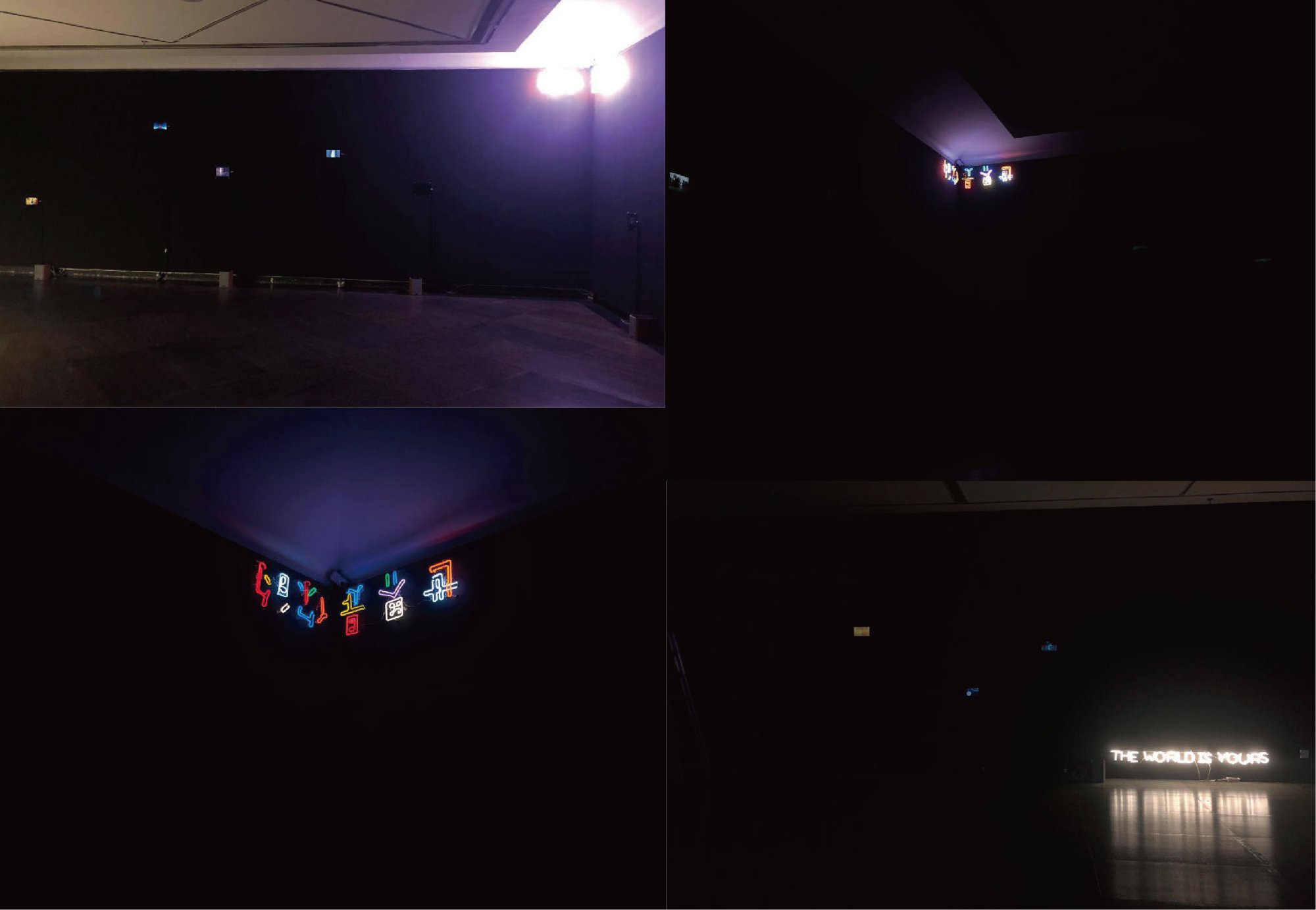
Simulated installation — small screens in a blackout hall; fractured-glyph neon; the sentence as a white neon resting on the floor.
03 · Research
Everyone lives on second-hand experience — and the handover always leaks
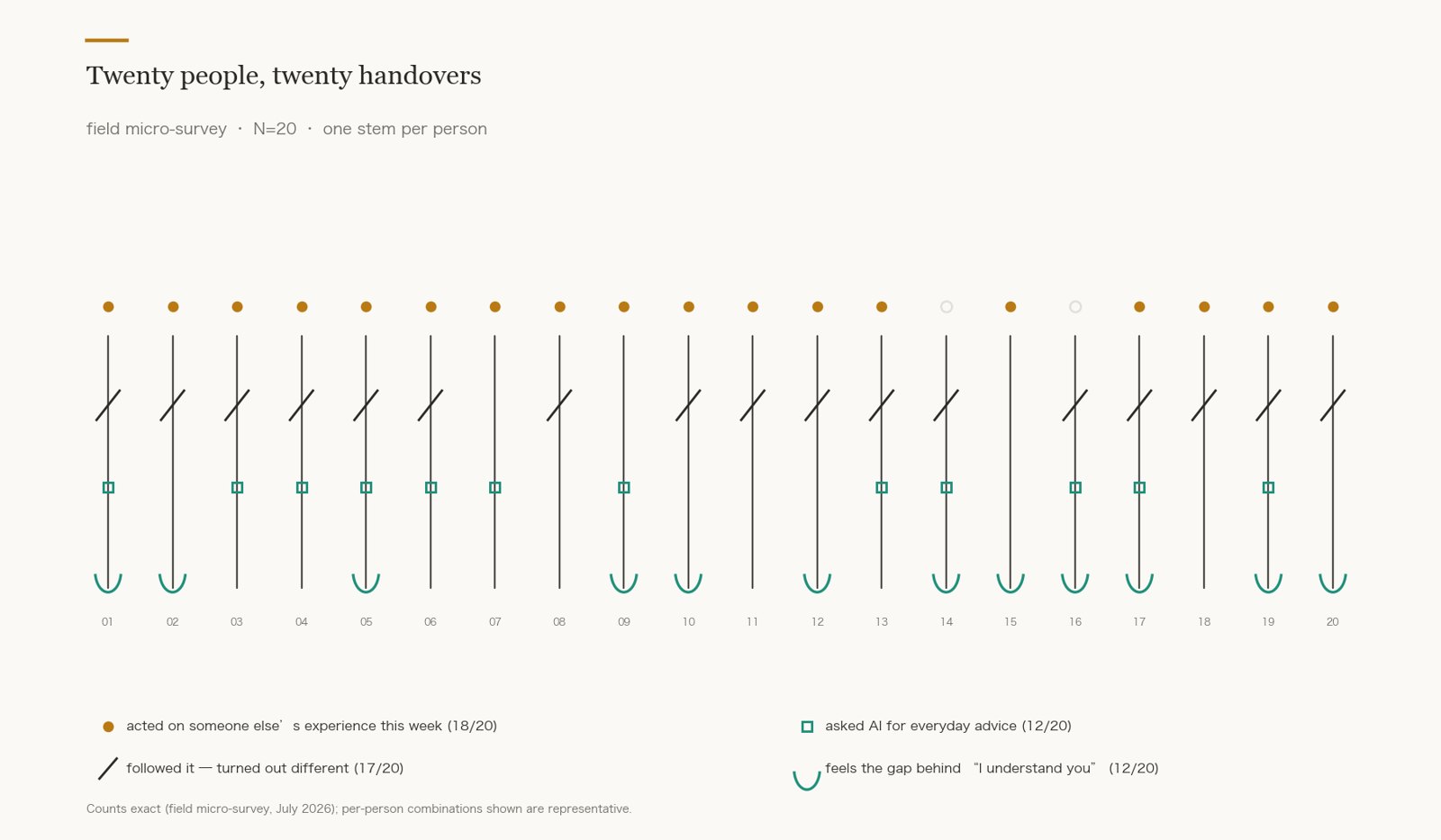
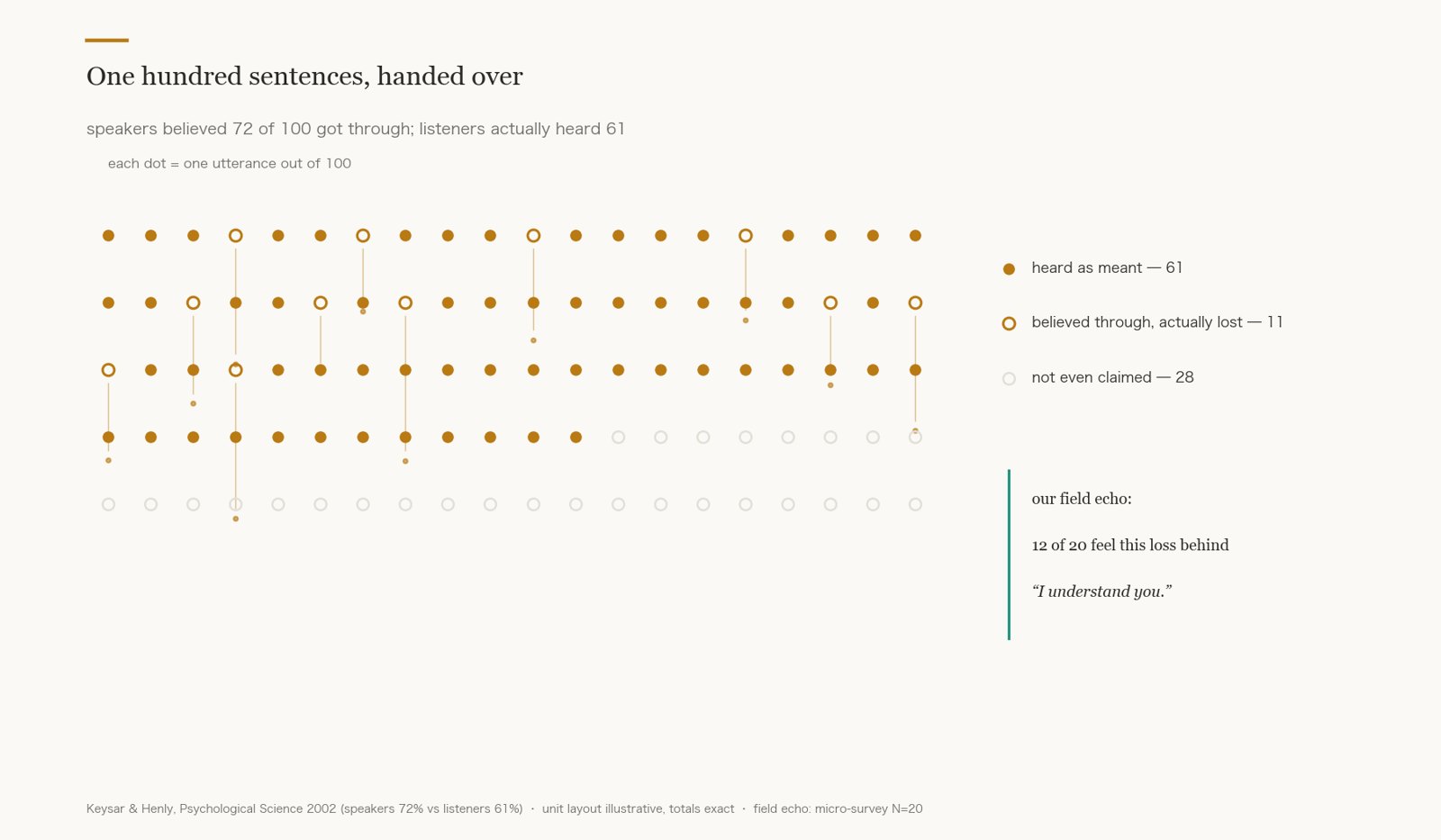
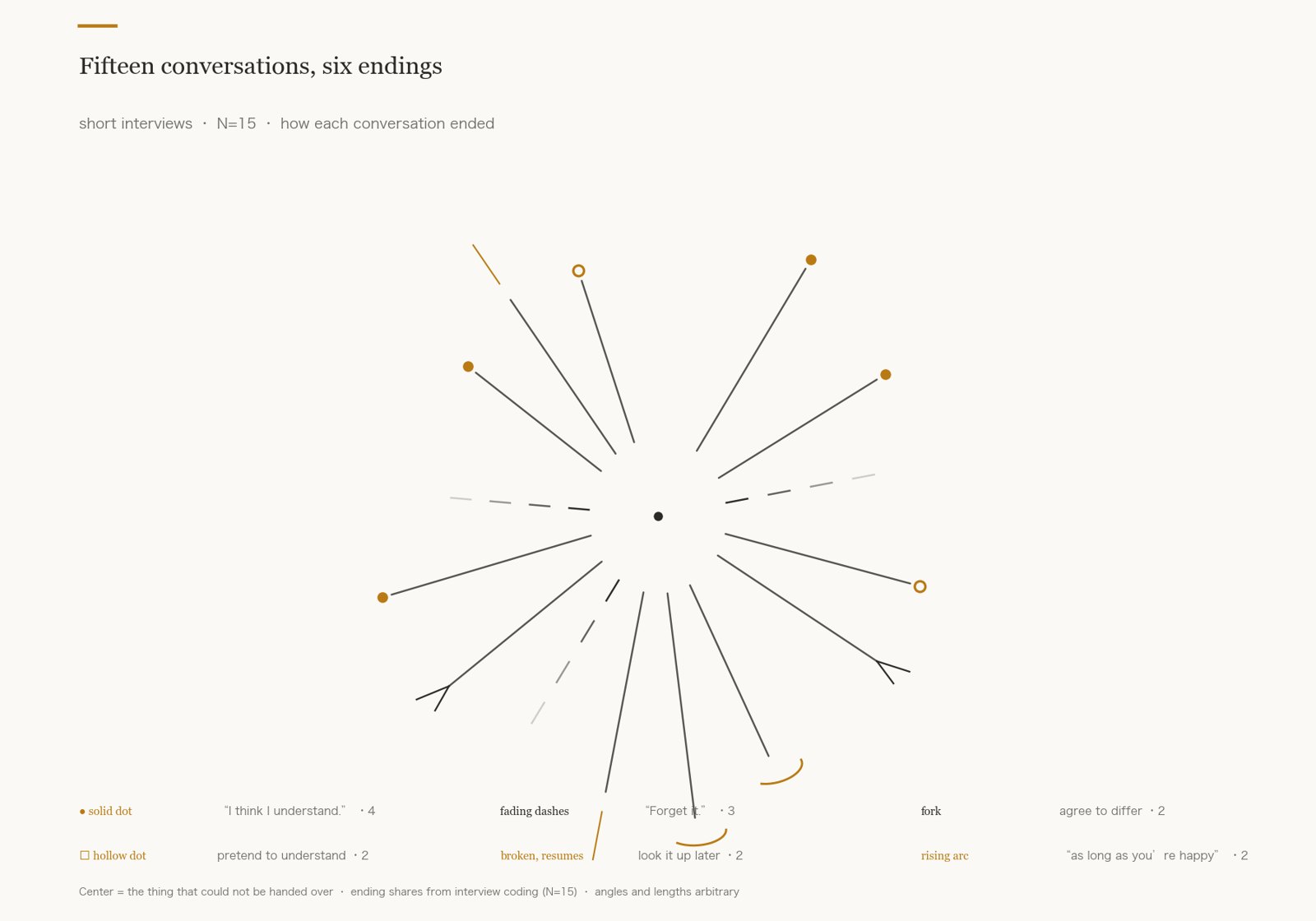
Field research (short interviews N=15 · bilingual micro-survey N=23, July 2026) drawn one person at a time, beside representative surveys and controlled experiments that find the same condition.
FIG. 01FIELD MICRO-SURVEY · N=20 · ONE STEM PER PERSON
"Sweet like sugar — but the small part that isn't sugar is usually the part that matters."
P13 · the good-enough theory of understanding, from the field
Field data is a small qualitative sample; the surveys and experiments are representative or controlled. Shown side by side, never interchanged. Denominators are per figure: FIG.01 draws on the first 20 survey responses (collection continues, N=23); FIG.02 visualises Keysar & Henly 2002; FIG.03 codes all fifteen interviews.
Ethics & Consent
Interview consent and exhibition-playback consent are collected separately; storytellers keep veto power over the finished films. Blind collaborators are credited, compensated co-creators; braille assets pass three fabrication gates with blind proofreaders.
What This Adds to HCI
C1 — a six-ending taxonomy of how everyday understanding closes. C2 — folk theory meets the literature: the honey gap as good-enough understanding. C3 — “forget it”: the invisible endpoint where people stop asking to be understood.
04 · Your Turn
The thing I can never describe is…
We made the eleven films by listening to blind friends describe things, then trying to draw what we heard. The story wall lets anyone try the same thing from the other side. You finish a sentence from our survey. I read it. Then a program that has only seen the eleven films tries to draw it, and I pick one of its two attempts. It usually gets something wrong. We show it anyway, with a label saying a machine guessed this.
01 · WRITEanonymous, 10–600 characters
02 · CURATEa person reads first
03 · THE GUESSone motif · one film palette · a model trained on the films
04 · THE WALLwords first, then the picture
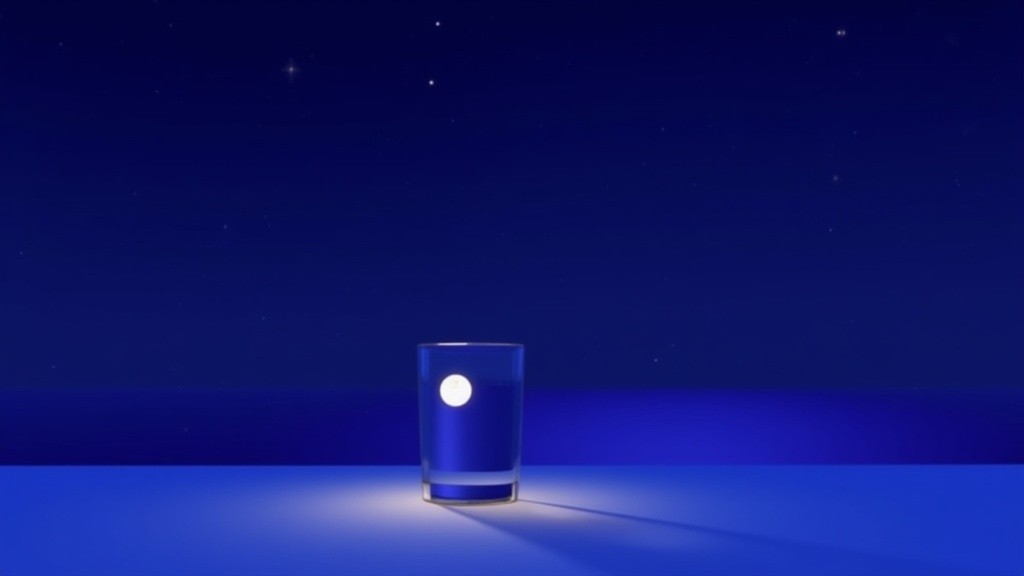
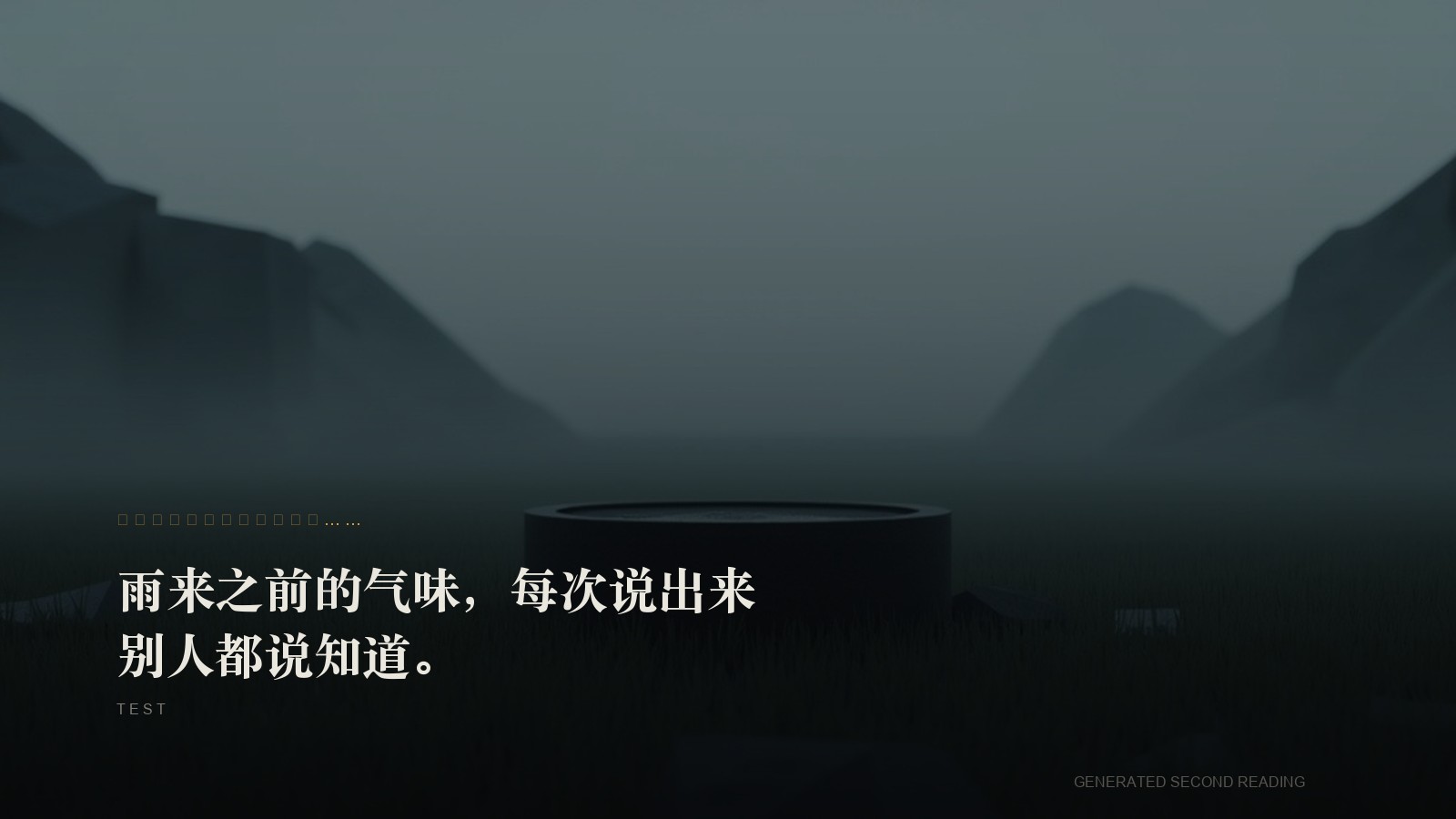
雨来之前的气味。 · fog-grey — an uncarved stone pillar in low grass, darkening from the mist before any raindrop falls我母亲叫我名字的方式。 · paper-yellow — an open doorway in warm haze; a brass bell on the threshold, a motionless ring of light想念一个人的时候,夜里发生的事。 · moon-night — a glass of water on a bedside table; inside it a tiny pale moon casting indigo shadows真心。 · wire-plain — one unshielded flame inside a glass sphere on a vast dark plain, holding a circle of warmthIt vanishes before I even notice it. · fog-grey — a stone doorway alone in damp grass, its top frame dissolving into mistdisplay mode — the first visitor submission as it appears on the wall, composed from the live page
Five of these six came from answers on our quote wall; we used them to test the style before opening the wall. The sixth is the first thing a visitor sent in. Every picture is labelled as a machine's guess. The program was trained on the eleven films only, never on what visitors write. People agree separately to being shown and to being drawn; we don't ask for names; anyone can email to have theirs taken down; I read everything before it goes up.
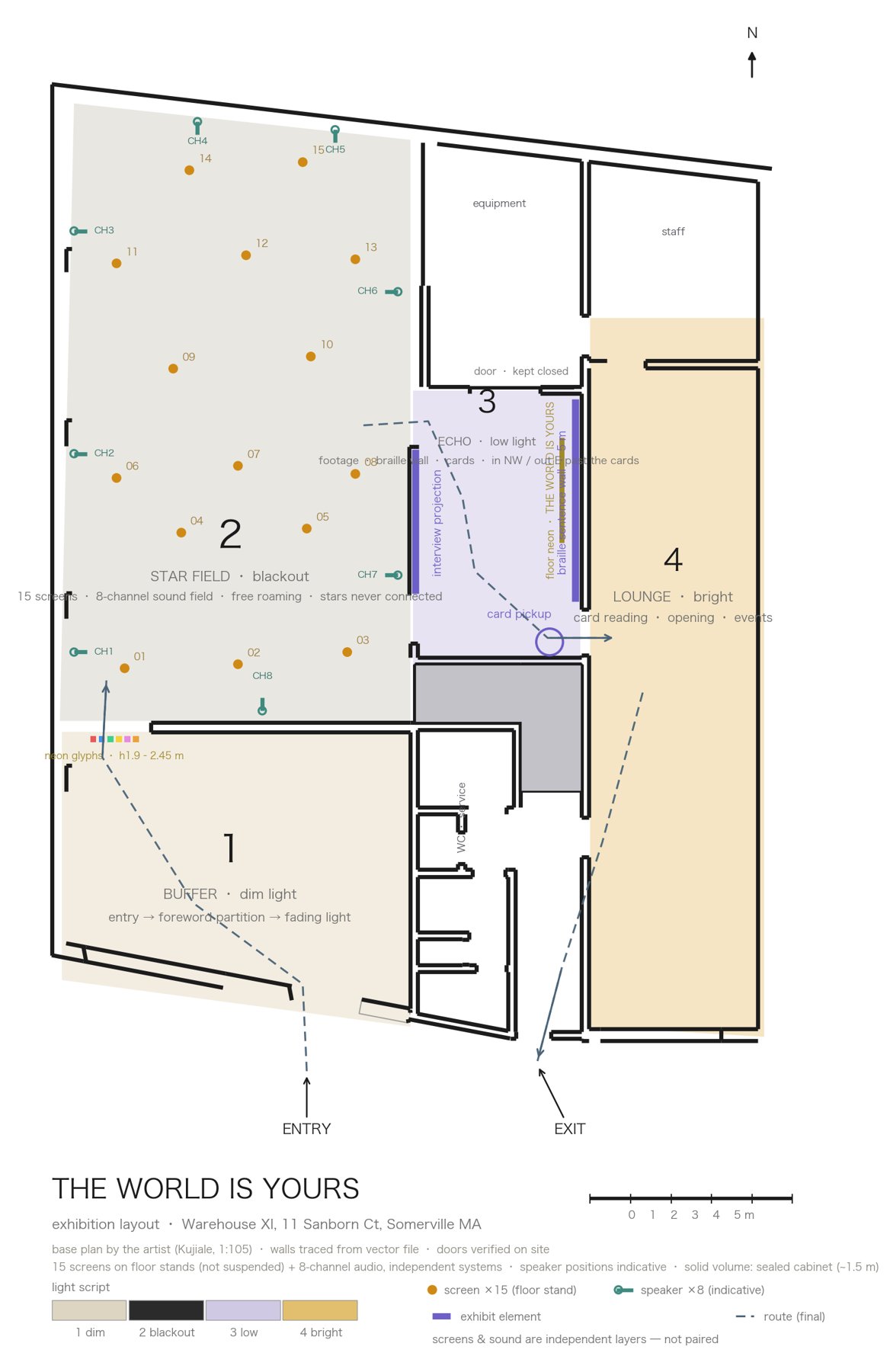
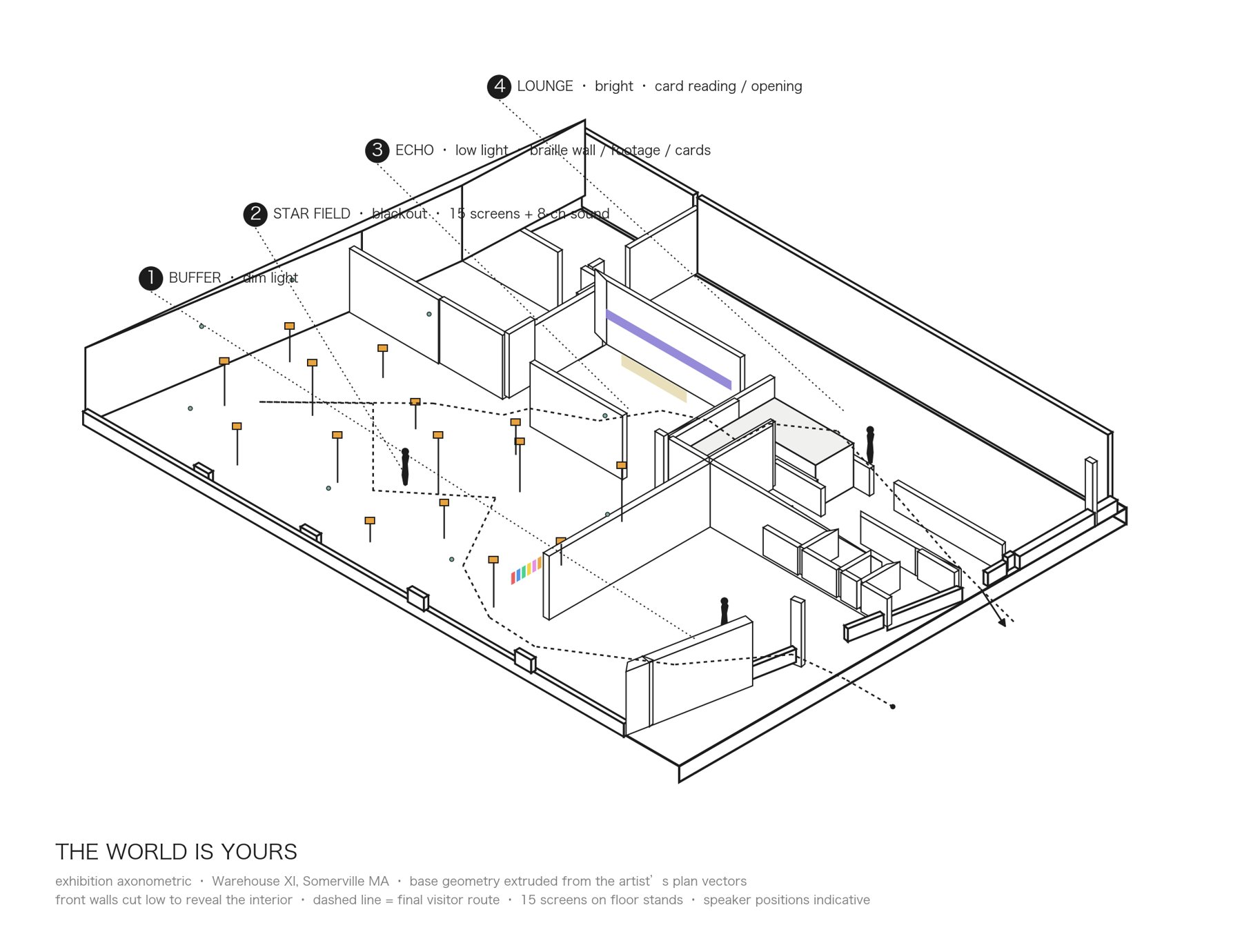
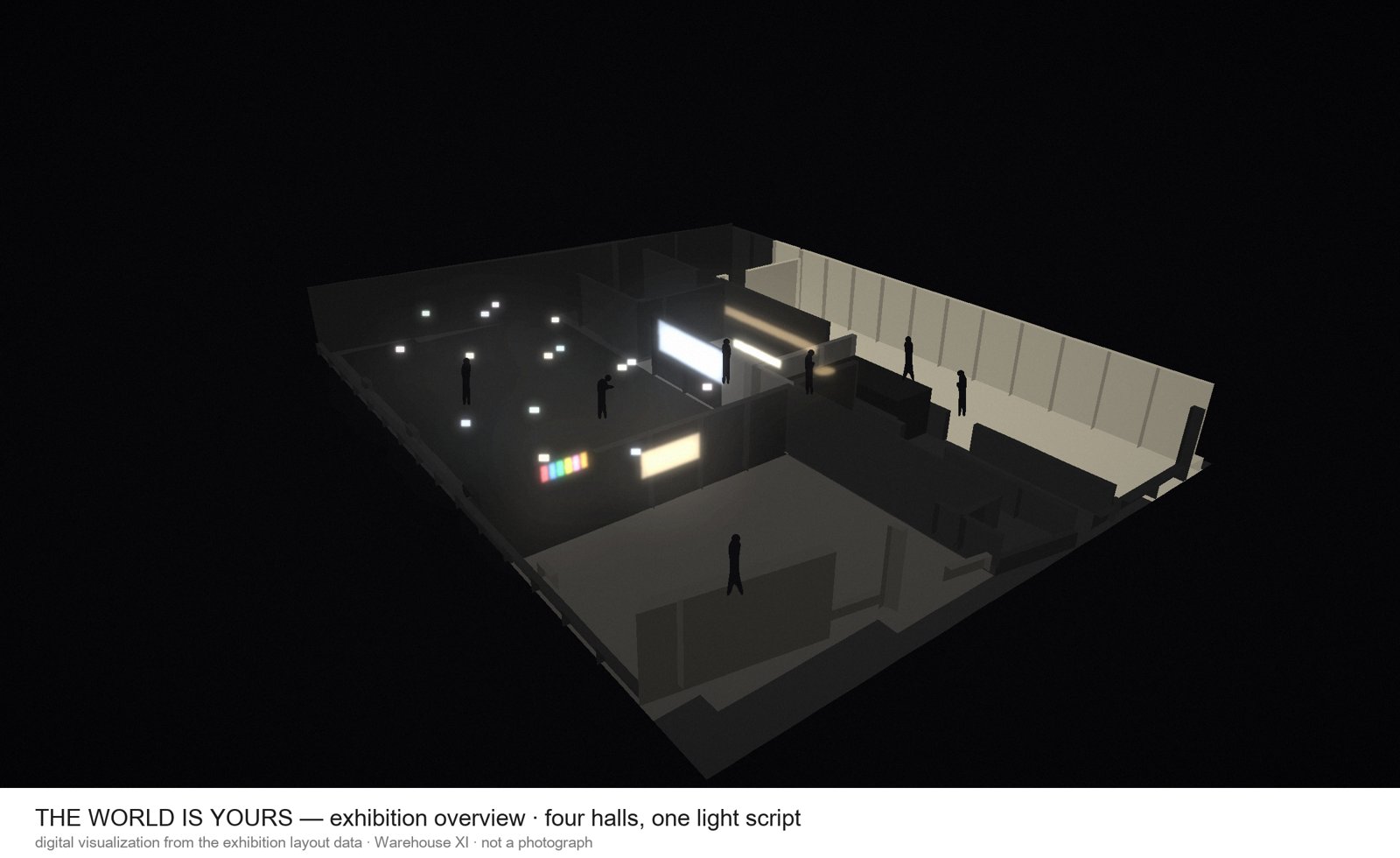
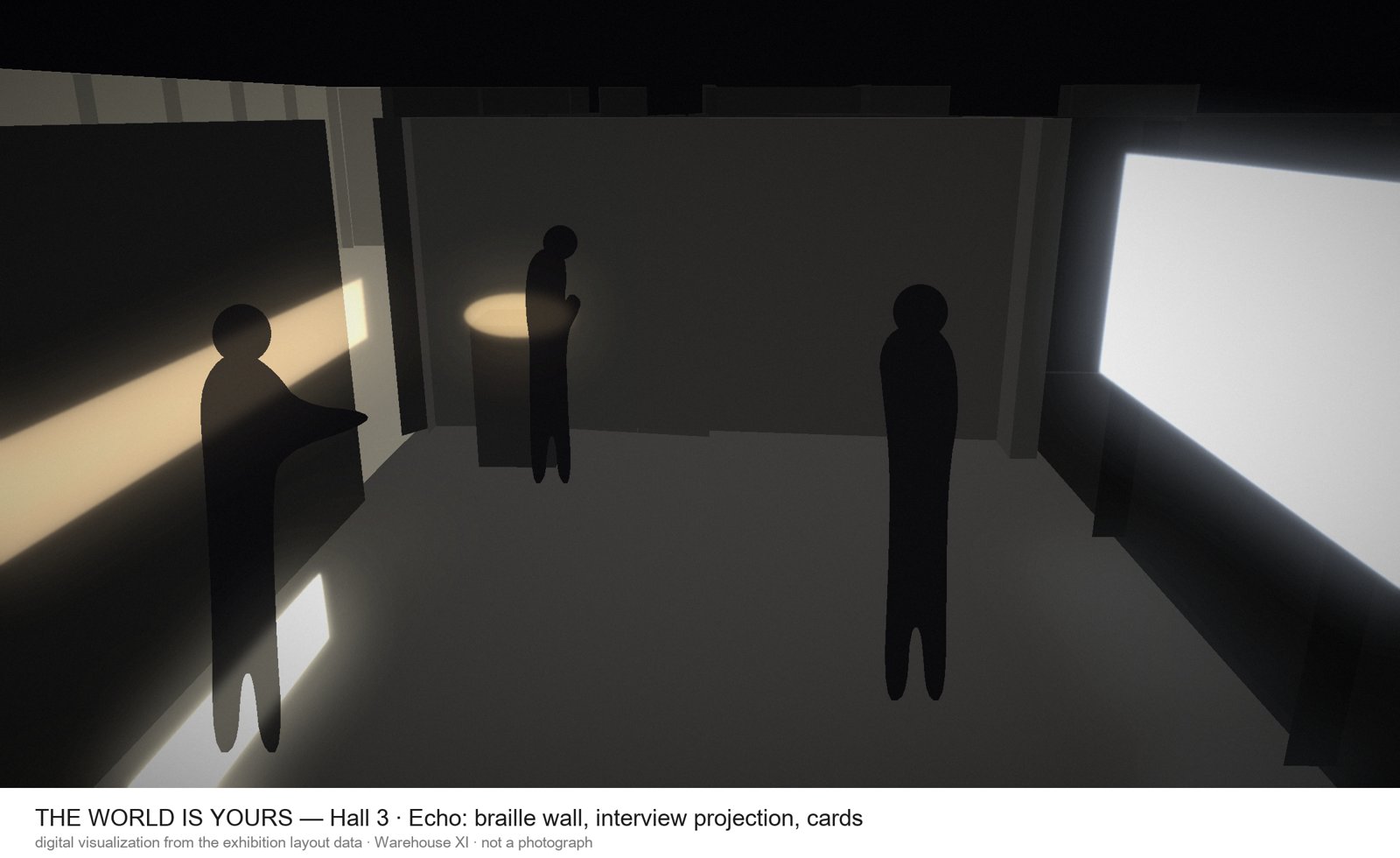
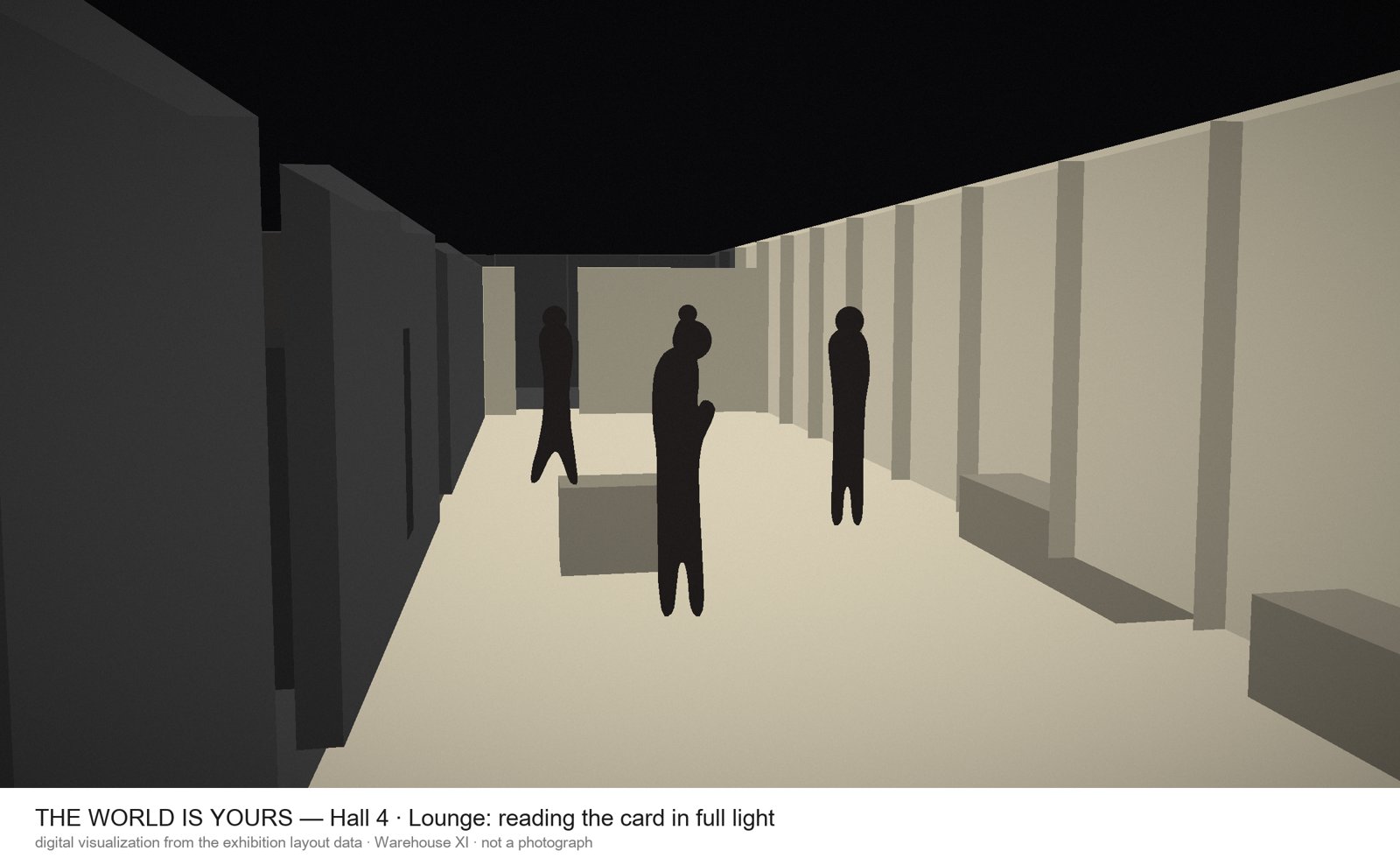
A proposed staging at Warehouse XI: a dim buffer, a blackout star field of fifteen hand-height screens, a low-lit echo hall with a braille sentence wall and a card taken in the dark, a bright lounge where the card is finally read.
1 · BUFFERdim
2 · STAR FIELDblackout
3 · ECHOlow
4 · LOUNGEbright
Floor plan — geometry from the author's CAD.Axonometric — route identical to plan; two original neons placed back in.
Overview — four halls, one light scriptHall 3 · EchoHall 4 · Lounge
Renders are digital visualizations from the layout data — not photographs.